
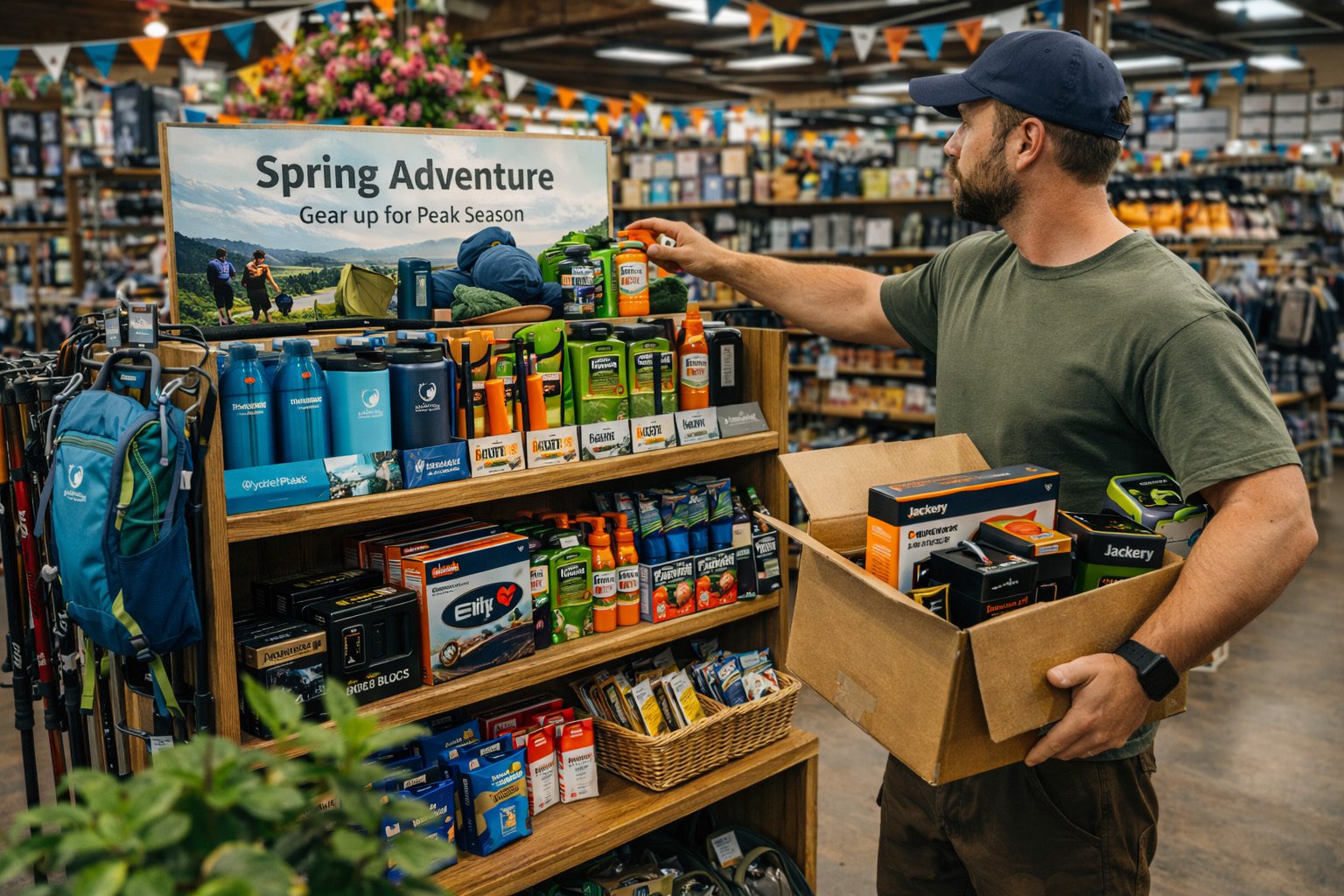
April is one of the most important months in the outdoor sporting goods retail calendar. As temperatures rise and daylight hours increase, consumers begin preparing for hiking trips, camping weekends, fishing outings, and backyard adventures. For outdoor retailers, this seasonal shift creates a major opportunity to increase foot traffic, boost average transaction value, and position the store as the go-to destination for spring outdoor gear.
The key is effective merchandising. Retailers that adjust their store layout, seasonal displays, and product groupings in April are often the ones that see the strongest sales through late spring and early summer.
This merchandising playbook outlines how outdoor sporting goods retailers can set up their store to capture peak demand and drive stronger spring sales.
Start with a Seasonal Store Reset
Many outdoor stores carry winter inventory well into early spring, which can slow momentum as consumer interests shift toward warmer weather activities.
April is the time to perform a complete seasonal reset of the sales floor. This means moving spring and summer outdoor gear to the most visible locations in the store and repositioning slower-moving winter items.
Top spring categories to highlight include:
- camping gear and backpacking equipment
- hiking backpacks and hydration packs
- fishing tackle and fishing accessories
- bug protection and tick repellents
- portable outdoor power banks and headlamps
- portable camp chairs and packable outdoor gear
Customers entering the store should immediately see products that match the season. This creates excitement and helps shoppers quickly identify items they need for upcoming outdoor trips.
Build a “Spring Adventure” Feature Display
One of the most effective merchandising strategies for outdoor retailers is creating a central seasonal display that tells a clear story.
A Spring Adventure display can combine multiple product categories into one cohesive presentation focused on outdoor recreation.
For example, the display could include:
- lightweight hiking backpacks
- hydration systems and insulated water bottles
- trekking poles
- bug spray and insect protection
- portable power banks
- trail snacks and hydration mixes
Grouping these products together helps customers visualize their next outdoor trip and encourages them to purchase multiple items at once.
Seasonal storytelling displays like this are proven to increase basket size, cross-category sales, and impulse purchases.
Create High-Visibility Endcaps
Endcaps are some of the most valuable merchandising spaces in any retail store. In outdoor sporting goods retail, they are ideal for highlighting trending outdoor gear and seasonal essentials.
For April, high-performing endcap categories often include:
- bug protection and mosquito repellent
- hydration bottles and hydration packs
- portable lighting and rechargeable headlamps
- sunscreen and sun protection gear
- lightweight rain jackets and packable apparel
Endcaps should be simple, clean, and easy to shop. Avoid overcrowding the display. Instead, focus on a small number of related products that solve a specific seasonal need.
Retailers that rotate endcaps every few weeks can maintain customer interest and encourage repeat visits.
Optimize the Checkout Area for Impulse Buys
The checkout counter is one of the most underutilized merchandising opportunities in outdoor retail.
Customers waiting to pay are already in a buying mindset, making this the perfect place to display small outdoor accessories and convenience items.
High-performing checkout products often include:
- fishing hooks and small tackle packs
- batteries and portable chargers
- bug bite relief sticks
- small flashlights or keychain lights
- carabiners and gear ties
- electrolyte packets and outdoor drink mixes
These items typically fall within a low price range, making them easy impulse purchases that increase the average transaction value without requiring heavy sales effort.
Cross-Merchandise by Activity
Outdoor consumers often shop based on activities rather than individual product categories.
Instead of organizing products strictly by brand or product type, consider merchandising by outdoor activity.
Examples include:
Hiking Display
- daypacks
- hydration packs
- trekking poles
- trail snacks
- bug protection
Camping Display
- camp stoves
- cookware
- lanterns and lighting
- sleeping gear
- portable chairs
Fishing Display
- tackle boxes
- fishing line
- tools and accessories
- sunscreen and hydration bottles
This approach helps customers quickly find everything they need for a specific outdoor activity, increasing the likelihood of multiple purchases.
Highlight New and Trending Products
Outdoor customers are always interested in discovering the latest gear. Highlighting new arrivals and trending outdoor products can help drive curiosity and encourage shoppers to explore the store.
Retailers should dedicate a small area to:
- new outdoor gear arrivals
- innovative camping products
- lightweight and packable outdoor gear
- new fishing accessories
- trending hydration products
Clear signage such as “New for Spring” or “Trending Outdoor Gear” can help draw attention and spark conversations between staff and customers.
Use Clear Signage and Simple Messaging
Good merchandising is not just about product placement—it also relies on clear communication.
Signage should quickly explain why a product is useful or relevant for the season.
Examples of effective messaging include:
- “Spring Hiking Essentials”
- “Summer Camping Must-Haves”
- “Stay Charged on the Trail”
- “Mosquito and Tick Protection”
These simple cues help customers understand the value of the products and encourage them to explore categories they may not have originally planned to purchase.
Train Staff to Support Seasonal Displays
Even the best store layout benefits from knowledgeable staff. Employees should be familiar with the seasonal displays and understand the products featured in them.
Encourage staff to ask customers questions such as:
- “Are you heading out for any camping trips this spring?”
- “Do you have everything you need for hiking season?”
- “Have you tried our new hydration packs?”
These conversations often lead to additional product recommendations and higher overall sales.
Final Takeaway
April is the moment when outdoor retailers can position their store for peak spring and summer sales. By resetting the sales floor, building seasonal displays, optimizing checkout impulse items, and highlighting trending outdoor gear, retailers can create a shopping environment that encourages discovery and larger purchases.
Effective outdoor retail merchandising helps customers quickly find what they need for their next adventure while also introducing them to new products they may not have considered.
For outdoor sporting goods stores, the goal is simple: make the store feel ready for adventure. When customers walk in and immediately see gear that matches their plans for hiking, camping, or fishing, they are far more likely to leave with everything they need for the season ahead.
 Previous Article