
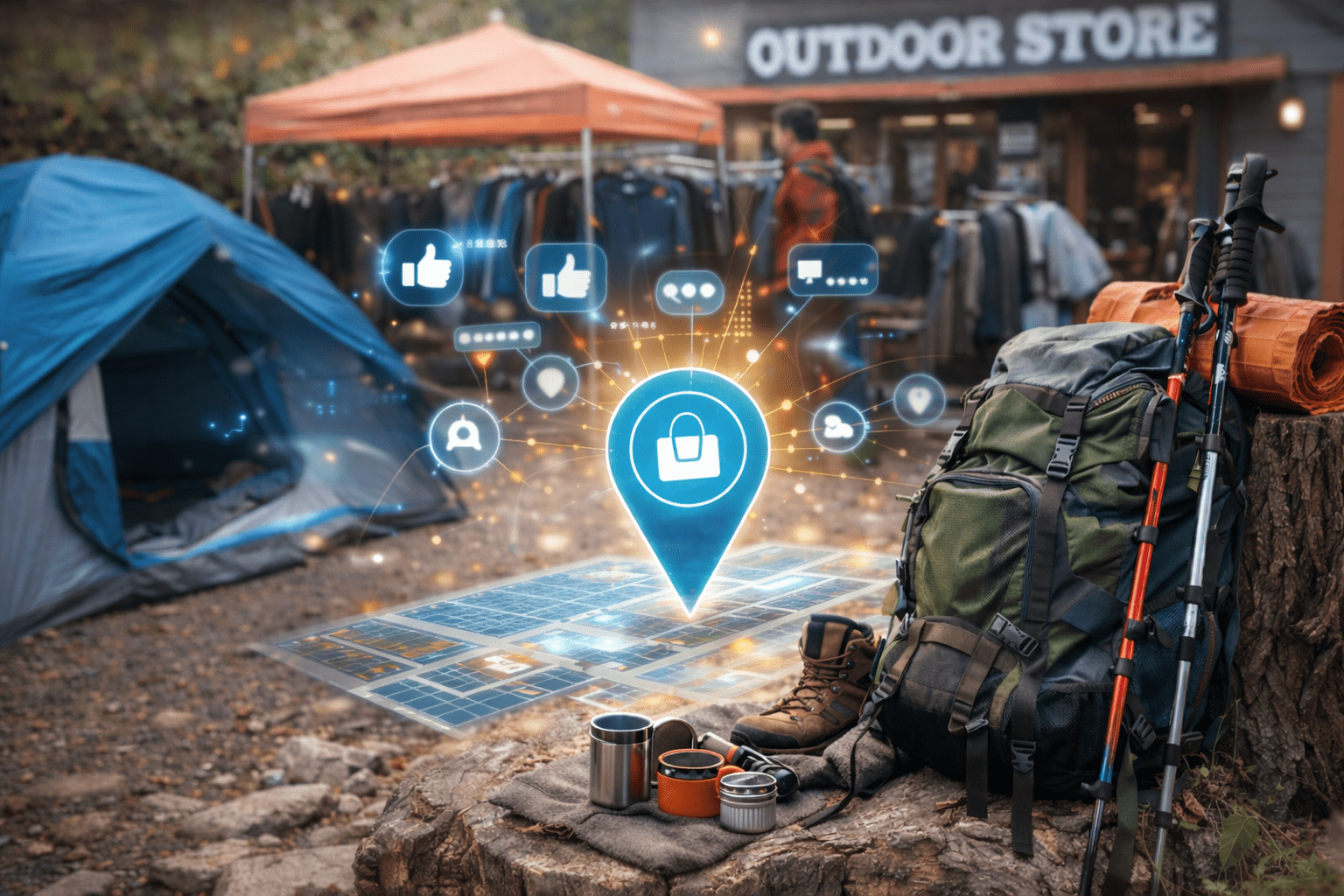
The way customers discover retail stores is changing fast. In 2026, shoppers aren’t just searching on Google anymore. They’re asking AI-powered tools, voice assistants, map apps, and social platforms where to shop, what to buy, and which store to trust.
For retail store owners, this shift matters. If your business isn’t showing up where AI-driven search pulls information from, you’re invisible before a customer ever steps foot in your store.
Understanding how AI search works — and how to optimize for it — is now a core part of retail marketing.
From Traditional Search to AI-Powered Discovery
Traditional search focused on keywords and websites. AI search focuses on context, accuracy, and trust.
When a customer asks, “Where can I buy this near me?” AI systems pull data from:
- Google Business Profiles
- Online reviews
- Store location and hours
- Product availability signals
- Website content and social proof
AI search engines prioritize businesses that appear reliable, current, and locally relevant. Retailers who rely only on a website without maintaining their local presence are already falling behind.
This is why local SEO for retail stores looks very different in 2026 than it did even two years ago.
Why Google Business Profile Matters More Than Your Website
For many customers, your Google Business Profile is your first impression.
AI-powered search tools heavily reference Google Maps and business listings to answer local shopping questions. If your profile is incomplete or outdated, customers may never see your store.
Retailers should regularly:
- Update store hours and holiday schedules
- Add new in-store photos
- Respond to customer reviews
- Keep categories and descriptions accurate
An optimized Google Business Profile increases visibility across AI search, map results, and voice search — all critical touchpoints for local retail marketing.
Reviews Are Now a Ranking Factor for AI Search
In 2026, reviews influence more than reputation. They influence discoverability.
AI search engines analyze review frequency, sentiment, and recent activity to determine whether a store is relevant. A retail store with fresh, positive reviews will outperform a competitor with outdated or inconsistent feedback.
Smart retail stores:
- Ask for reviews at checkout
- Include review requests in email and SMS follow-ups
- Respond professionally to both positive and negative reviews
Reviews aren’t just social proof — they’re a visibility asset.
Product-Level Content Helps AI Recommend Your Store
AI search is getting more specific. Customers aren’t just asking where to shop; they’re asking what to buy.
Retailers who publish product-focused content improve their chances of being recommended by AI systems. This includes:
- Clear product category pages
- Simple buying guides
- Short product explanation videos
- Blog content tied to real customer questions
You don’t need thousands of pages. You need clear, helpful content that matches how customers actually search.
This approach strengthens retail SEO while also supporting in-store sales.
Social Media Signals Feed AI Search Results
Social platforms are no longer just marketing channels — they are discovery engines.
AI search tools pull context from social media to understand what’s trending locally and which businesses are active. Retailers who consistently post real, in-store content send strong signals of relevance.
High-impact social content includes:
- New arrival walkthroughs
- Staff recommendations
- Short-form video filmed inside the store
- Local event promotions
Authentic, frequent updates help AI systems recognize your store as active and relevant in your market.
Accuracy and Consistency Matter More Than Ever
AI search rewards consistency.
If your store hours differ across platforms, your address is formatted incorrectly, or your website conflicts with your listings, AI tools lose confidence in your business.
Retailers should ensure:
- Store name, address, and phone number match everywhere
- Website, maps, and social profiles align
- Seasonal changes are updated promptly
Consistency improves trust — and trust improves visibility.
What Retail Store Owners Should Do Next
You don’t need to become an AI expert to benefit from AI search in 2026. You need to focus on fundamentals.
Start with:
- Cleaning up local listings
- Encouraging reviews
- Publishing helpful product content
- Staying active on social media
- Keeping information accurate and current
Retail marketing is no longer about chasing algorithms. It’s about making your store easy to find, easy to trust, and easy to choose.
AI search is simply rewarding the retailers who do that best.
 Previous Article